Your Wisdom Tooth Doesn't Hurt. Does It Really Need to Come Out?

A painless wisdom tooth isn't always a healthy tooth. But that doesn't mean every wisdom tooth needs to be removed.
Imagine visiting your dentist for a routine examination. Everything seems fine. You don't have any pain, you can chew comfortably, and nothing about your teeth is particularly bothering you. Then your dentist shows you an X-ray revealing that one of your wisdom teeth is lying at an angle, partially trapped beneath the gum or jawbone. You're told that removing it may be recommended.

Naturally, your first reaction is to question the recommendation. Why would you agree to surgery when the tooth isn't causing any discomfort? Wouldn't it make more sense to leave it alone? But then another concern comes to mind: What if the tooth causes problems later? Could waiting damage the tooth beside it, or make removal more complicated as you get older?
These are reasonable questions, and the answers are not always straightforward. At Toronto Smile Design – Yorkville Dental, we believe the decision to remove a wisdom tooth should begin with understanding its condition, not simply discovering that it's impacted. Our role is to help you understand what the examination shows, what could happen if the tooth remains, and what you would be accepting if you choose surgery. Whether your treatment involves a simple filling, dental implant, or wisdom tooth extraction, you deserve to understand the plan before making a decision.
A Wisdom Tooth Can Be Painless Without Being Healthy
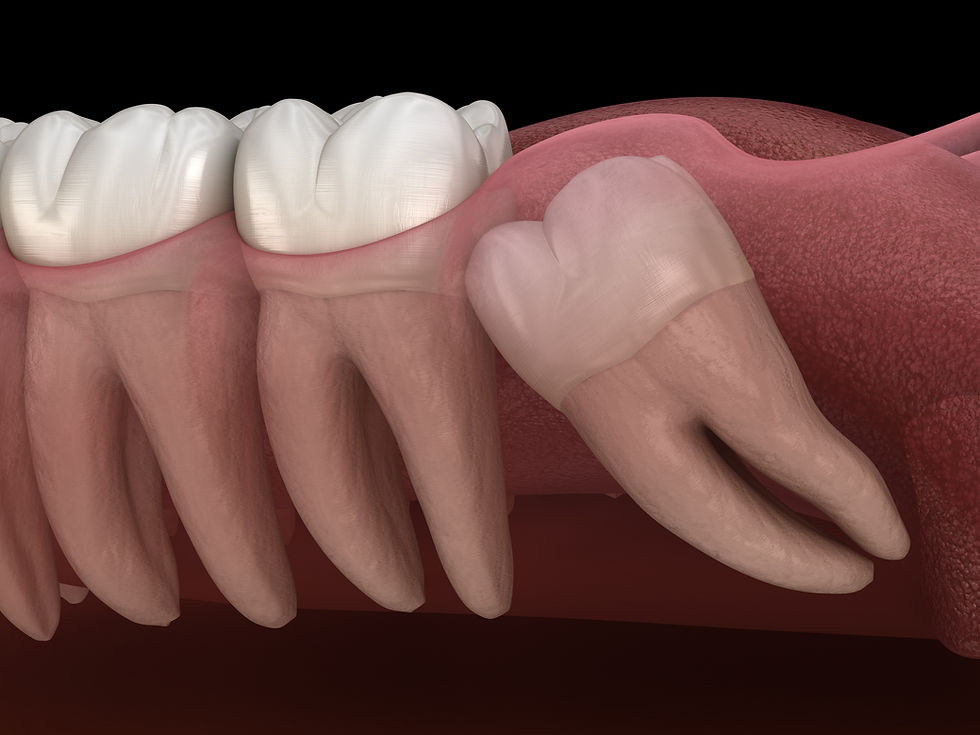
Wisdom teeth, also known as third molars, are the last permanent teeth to develop. They typically emerge during the late teenage years or early adulthood, although their development and eruption vary from person to person. Some wisdom teeth emerge normally, have sufficient space, function properly, and remain healthy for many years. Others become impacted, meaning they cannot erupt completely into their expected position. An impacted wisdom tooth may remain entirely within the jawbone, become partially visible through the gum, or develop at an angle toward the neighbouring second molar.

What many patients don't realize is that pain is not always the first sign of a dental problem. A partially erupted wisdom tooth may create an area where plaque and food accumulate beneath the surrounding gum, potentially contributing to inflammation or infection known as pericoronitis. An angled wisdom tooth may also create a difficult-to-clean surface between itself and the neighbouring molar, increasing the possibility of decay or periodontal problems. In other situations, a cavity may develop in the wisdom tooth itself without producing noticeable symptoms. Less commonly, cysts or other pathological changes may develop in association with an impacted tooth.
These conditions do not necessarily produce pain during their earliest stages. This is why dentists distinguish between a tooth that is asymptomatic, meaning it isn't causing noticeable symptoms, and one that is disease-free, meaning there is no identified disease associated with it. A tooth can be asymptomatic without being disease-free, and understanding that difference is one of the most important steps in deciding whether removal or monitoring is appropriate.
When Should a Wisdom Tooth Be Removed?
There are circumstances in which removing a wisdom tooth is an appropriate treatment recommendation, even when symptoms are relatively mild or intermittent. Recurring inflammation around a partially erupted tooth, for example, can make the surrounding tissues painful and difficult to maintain. If infection returns repeatedly or the anatomy makes effective hygiene impractical, extraction may be recommended. Similarly, a wisdom tooth with extensive decay that cannot reasonably be restored may have little benefit in remaining, particularly when its position also contributes to decay or periodontal damage affecting the neighbouring second molar.
Other indications for removal may include cystic changes, certain pathological conditions, or interference with the eruption or appropriate management of another tooth. In these situations, the examination and diagnostic findings help explain why surgery is being considered. However, an impacted tooth is not automatically a diseased tooth. Its position is important information, but the decision to remove it depends on the overall clinical assessment rather than one finding alone.

The situation becomes more complicated when a wisdom tooth is impacted but shows no symptoms or evidence of disease. In those circumstances, two reasonable possibilities may exist: removing the tooth because of anticipated future concerns or keeping it under professional surveillance. The available scientific evidence does not establish that one option is automatically better for every patient.
A 2020 Cochrane systematic review examined studies comparing removal and retention of asymptomatic, disease-free impacted wisdom teeth. The researchers concluded that there was insufficient reliable evidence to determine whether routine removal or retention produces better overall outcomes. One included study suggested a possible association between retaining impacted wisdom teeth and an increased long-term risk of periodontal problems affecting the neighbouring second molar, but the certainty of that evidence was very low. Another study investigated whether removing impacted wisdom teeth could prevent crowding of the lower front teeth and did not demonstrate a meaningful benefit for that purpose.
These findings challenge the assumption that every impacted wisdom tooth must be removed simply because it might cause a problem someday. At the same time, they do not prove that keeping every disease-free impacted tooth is always the best choice. Different professional organizations may place different emphasis on preventive removal or continued surveillance, particularly when considering age, tooth position, access for cleaning, and the likelihood of future disease. The decision should therefore be individualized, taking into account both the clinical findings and the patient's preferences.
Removing the Tooth or Monitoring It: Understanding Your Options
When there is an appropriate clinical indication, wisdom tooth extraction can help address existing disease and reduce the possibility of further problems associated with that tooth. If a wisdom tooth is contributing to repeated infections, extensive decay, periodontal damage, or another identified condition, removal may be the most appropriate treatment. In certain cases, preventive removal may also be discussed when the tooth's position and surrounding anatomy suggest a significant likelihood of future problems. However, patients should understand that surgery involves recovery time, financial considerations, and potential complications, even when the procedure is carefully planned and appropriately performed.
Some wisdom teeth can be removed relatively simply, while others are deeply impacted, have complex root anatomy, or lie close to important anatomical structures. These differences can affect the complexity of the procedure and the risks involved. This is why we believe a careful examination and appropriate imaging should come before scheduling surgery. The goal is not simply to remove a tooth, but to understand why removal is appropriate, how the procedure should be planned, and what the patient can realistically expect.
For other patients, retaining a symptom-free, disease-free wisdom tooth may be a reasonable option.
Monitoring avoids surgery that might never have been necessary, along with its associated risks and recovery requirements. However, choosing not to remove the tooth should not mean forgetting about it. If you and your dentist decide to keep the wisdom tooth, the surrounding gum tissues, neighbouring second molar, and tooth position should continue to be evaluated during regular examinations.
Depending on the clinical situation, your dentist may assess periodontal pocket depths, check for decay or food trapping, review changes in the tooth's position, and recommend additional radiographs when appropriate. You should also understand which symptoms warrant an earlier visit, including pain, swelling, recurring inflammation, unpleasant taste or drainage, or increasing difficulty opening your mouth. Some patients retain their wisdom teeth for life without developing significant problems, while others may require treatment after a period of observation.
Monitoring is not a decision to ignore the tooth. It is an active management plan with its own responsibilities and follow-up requirements.
Does Waiting Make Wisdom Tooth Removal More Difficult?
One of the most common concerns among younger patients is whether delaying wisdom tooth removal will make surgery more complicated later in life. The answer depends on several factors, including the tooth's position, root development, surrounding bone, existing disease, and the patient's general health. Some studies have identified increasing age and deeper impaction as factors associated with greater surgical difficulty or higher complication rates, although these relationships are not uniform across all studies.
A wisdom tooth that is causing no problems at age 20 may remain healthy for many years. On the other hand, a tooth that eventually develops extensive decay, repeated infections, or periodontal damage affecting the second molar may create a more complicated situation later. The condition of the surrounding tissues and the anatomy of the roots can also influence the procedure. For this reason, timing deserves thoughtful consideration when there is a realistic concern about future disease.
However, this information should not be used to pressure every young adult into preventive surgery. Being young is not, by itself, a sufficient reason to remove every impacted wisdom tooth. The decision should consider the current findings, anticipated future risks, potential surgical complications, and how the patient personally weighs the advantages and disadvantages of each option.
Understanding the Risks of Wisdom Tooth Surgery
One of the principles we emphasize at Toronto Smile Design is that informed consent is more than signing a document. Before agreeing to surgery, patients should understand the proposed procedure, its expected benefits, relevant complications, reasonable alternatives, and the likely consequences of declining treatment. Even when extraction is clinically appropriate, it remains a surgical intervention with potential risks that should be discussed in a manner relevant to the individual patient.

Following wisdom tooth removal, temporary swelling, soreness, bruising, and limited mouth opening are common. These symptoms are often most noticeable during the first few days, although the recovery experience varies according to the complexity of the procedure and the individual patient. Other recognized complications include bleeding, postoperative infection, dry socket, damage to nearby teeth, nerve injury, and, in certain upper wisdom tooth extractions, communication with the maxillary sinus. Serious complications such as jaw fracture are rare.
Dry socket, also known as alveolar osteitis, is a painful postoperative condition associated with disruption or breakdown of the blood clot and delayed socket healing. In a large population-based study involving 16,609 patients who underwent impacted lower wisdom tooth removal, dry socket was recorded in approximately 3.6% of cases. Other studies have reported different rates because patient characteristics, surgical complexity, definitions, and follow-up methods vary. Smoking and certain other factors can increase the risk.
Nerve injury is another important consideration, particularly when the roots of a lower wisdom tooth lie close to the inferior alveolar nerve or the lingual nerve. Changes in sensation may affect the lower lip, chin, or tongue. Many nerve-related sensory disturbances improve over time, but persistent or permanent alterations are possible. In a Canadian prospective study involving 550 impacted mandibular wisdom teeth, six cases of inferior alveolar nerve sensory disturbance were reported, three of which were permanent. These figures describe the findings of one study population and should not be interpreted as the expected risk for every patient.
The likelihood of complications depends on several factors, including the depth and angulation of the impaction, root anatomy, relationship with neighbouring structures, and individual medical or behavioural considerations. This is why discussing generic complication percentages is not enough. Patients should also understand which risks are particularly relevant to their own clinical situation and how those risks influence the proposed surgical approach.
Why Examination and Imaging Matter Before the Decision
A clinical examination provides valuable information about the visible teeth and surrounding gum tissues, but impacted wisdom teeth often require radiographic assessment to understand their position. When indicated, a panoramic radiograph can show the wisdom teeth, their angulation, the neighbouring second molars, and their relationship to important anatomical structures. For lower wisdom teeth, particular attention is given to the relationship between the roots and the inferior alveolar nerve canal.
If conventional radiographs suggest a complex anatomical relationship or raise a clinical question that cannot be answered adequately, cone-beam computed tomography (CBCT) may be considered. CBCT provides three-dimensional information that can help clarify the anatomy and influence surgical planning in selected cases. However, it is not routinely necessary for every wisdom tooth extraction, and research has not demonstrated that obtaining CBCT for every patient reduces nerve injuries compared with appropriate conventional imaging. The additional radiation exposure must therefore be justified by the expected clinical benefit.
At Toronto Smile Design, we have access to CBCT technology when clinically indicated. Our purpose in using advanced imaging is not simply to obtain a more detailed picture, but to answer questions that matter for a patient's diagnosis and treatment plan. Understanding the relationship between an impacted tooth and the surrounding structures allows us to explain the surgical considerations more clearly and determine whether additional precautions or referral may be appropriate.
If extraction is recommended, we also discuss how the procedure would be performed and what the recovery may involve. Depending on the tooth's position, treatment may involve a straightforward extraction or a surgical procedure requiring access through the gum, removal of some surrounding bone, or division of the tooth into smaller sections. Local anaesthesia is used to control pain during the procedure, and sedation may be an option for suitable patients who experience significant anxiety or require more involved treatment.
Sedation is not necessary for every extraction and involves its own medical considerations. The appropriate options depend on the patient's health history, the complexity of the procedure, and the clinical assessment. Certain forms of sedation require additional preparation, monitoring, and arrangements for a responsible adult to accompany the patient home. These requirements, along with the relevant benefits and risks, should be discussed before the appointment.
Following surgery, patients receive instructions covering bleeding control, diet, oral hygiene, physical activity, medications, and symptoms that may indicate a complication. You can also review our Wisdom Tooth Extraction Home Care Instructions for general postoperative information. Individual instructions may differ depending on the procedure and your circumstances.
Our Approach at Toronto Smile Design: Understand First, Decide Together
If you visit Toronto Smile Design because you've been told your wisdom teeth should be removed, you don't need to arrive having already decided on surgery. Perhaps your wisdom teeth have never bothered you, and you're questioning whether removal is necessary. You may have experienced occasional inflammation and want to understand whether it is likely to happen again. Or perhaps your greatest concern is the possibility of nerve injury, postoperative discomfort, or the use of sedation. These questions are important because they influence how you evaluate the available choices.
We begin by listening to your concerns and reviewing your dental history before examining the tooth and surrounding structures. We assess the wisdom tooth's position, its accessibility for cleaning, the condition of the surrounding gum tissues, the neighbouring second molar, and any anatomical features that may influence treatment. When imaging is indicated, we explain what it shows and how the findings relate to the recommendation. The objective is to give you an understandable picture of the clinical situation rather than simply present you with a treatment estimate.
If removal is appropriate, we discuss the reasons for surgery, its anticipated benefits, material risks, reasonable alternatives, and expected recovery. We also explain whether additional assessment or referral may be beneficial. If there is no identified disease and monitoring is a reasonable option, we discuss what continued observation would involve, which findings should be reassessed, and what changes should prompt an earlier appointment.
Our objective is not to persuade every patient to undergo wisdom tooth surgery. It is to help you understand whether removal is necessary, reasonable, or avoidable in your particular situation. A recommendation is valuable only when the patient understands the reasoning behind it and has the opportunity to make an informed decision.
This philosophy guides our approach to dentistry, from preventive care to complex surgical and restorative treatment: Design. Plan. Then Treat.
Frequently Asked Questions About Wisdom Tooth Removal
Do all wisdom teeth need to be removed?
No. Wisdom teeth that are fully erupted, healthy, functional, and accessible for cleaning may remain in place. Some impacted wisdom teeth that have no symptoms or evidence of disease may also be monitored. The decision depends on the clinical findings, potential future risks, and the patient's preferences.
If my wisdom tooth doesn't hurt, can it still cause problems?
Yes. Decay, periodontal inflammation, damage to the neighbouring tooth, and certain other conditions may develop without noticeable pain in their early stages. This is why clinical examination and appropriate imaging are important even when the wisdom tooth is not causing symptoms.
Will my wisdom teeth push my front teeth out of alignment?
Current evidence does not support routinely removing asymptomatic wisdom teeth solely to prevent lower front-tooth crowding. Adult crowding has multiple contributing factors, and the Cochrane review did not establish a meaningful crowding-prevention benefit from extraction.
Is it better to have wisdom teeth removed when you're younger?
Some studies suggest that certain surgical complications and technical difficulties may increase with age, but age alone does not establish a need for extraction. A younger patient with a healthy, disease-free impacted wisdom tooth may reasonably be monitored, depending on the overall assessment.
What is dry socket, and how common is it?
Dry socket is a painful postoperative complication associated with disruption or breakdown of the blood clot after extraction. One large study involving impacted lower wisdom teeth reported a rate of approximately 3.6%, although rates vary between studies and individual circumstances.
Could wisdom tooth removal cause permanent numbness?
Permanent sensory changes are possible but uncommon. The risk is particularly relevant when a lower wisdom tooth is close to the inferior alveolar or lingual nerve. Your dentist should explain the material risks associated with your tooth's position and the proposed surgical approach.
Do I need a CBCT scan before wisdom tooth removal?
Not necessarily. Conventional radiographs provide sufficient information for many cases. CBCT may be considered when additional three-dimensional information is expected to influence the assessment or surgical plan.
What happens if I decide not to remove my wisdom tooth?
If monitoring is appropriate, the tooth and surrounding tissues should be reassessed during regular dental examinations. Additional imaging may be recommended when clinically justified, and you should understand which symptoms or changes warrant an earlier visit.
The Right Decision Begins With Understanding Your Options
Having a wisdom tooth doesn't automatically mean you need surgery, just as the absence of pain doesn't guarantee that the tooth and surrounding tissues are healthy. The important question is what the clinical findings tell us about your individual situation and which options are appropriate.
For some patients, removing a wisdom tooth is the best way to manage existing disease or address a significant clinical concern. For others, careful monitoring may be a reasonable alternative that avoids unnecessary intervention. Both choices have benefits, limitations, and potential consequences, and patients deserve to understand those differences before making a decision.
At Toronto Smile Design – Yorkville Dental, we believe treatment should begin with listening, careful examination, clear explanations, and individualized planning. Our role is to guide you through the available choices and help you understand the reasoning behind each recommendation. The goal isn't simply to remove a wisdom tooth; it is to make an informed decision about your dental health based on an appropriate clinical assessment.
Every Great Result Begins With a Plan. Design. Plan. Then Treat.
Toronto Smile Design – Yorkville Dental188 Cumberland Street, Toronto, Ontario
This article provides general patient education and does not replace an individualized dental examination. Decisions about wisdom tooth removal or monitoring depend on clinical findings, patient preferences, and relevant risks. Treatment outcomes and complication rates vary between individuals.
Scientific References
Ghaeminia H, et al. (2020). Surgical removal versus retention for the management of asymptomatic disease-free impacted wisdom teeth. Cochrane Database of Systematic Reviews.Read the Cochrane Review
American Association of Oral and Maxillofacial Surgeons. Management of Third Molar Teeth — White Paper.Read the AAOMS Guidance
Chen YW, Chi LY, Lee OKS. (2021). Revisit incidence of complications after impacted mandibular third molar extraction: A nationwide population-based cohort study. PLOS ONE.Read the Study
Bui CH, Seldin EB, Dodson TB. (2003). Types, frequencies, and risk factors for complications after third molar extraction. Journal of Oral and Maxillofacial Surgery.Read the Publication
European Academy of DentoMaxilloFacial Radiology. (2019). Cone beam CT imaging of the mandibular third molar: A position paper. Dentomaxillofacial Radiology.Read the Position Paper